
Ending Of Infinity War
Illustration by Slate. Still from Marvel.This post has more spoilers than has characters.! What just happened at the end of Avengers: Infinity War?Thanos, the big bad of the Marvel Cinematic Universe, got what he wanted all along: to collect all six, pop them into his gauntlet, snap his fingers, and kill half the living creatures in the universe—or, to be more precise, to make them fade out of reality like so much scattered ash. Alas, his randomly chosen victims include about half the heroes in this. So Black Panther, Star-Lord, Spider-Man they’re all gone?Ostensibly!Do you have a full list?Sure do.
May 04, 2018 The ending of Infinity War makes the split in the audience feel profound. There are two kinds of people that go to see Marvel movies. The ending of Infinity War feels like Marvel relying on that old trick once again, and it arguably cheapens the emotional impact of that last moment. What's the point in mourning Doctor Strange.
The casualties are Bucky (aka the White Wolf), Black Panther, Groot, the Scarlet Witch, Falcon, Mantis, Drax, Star-Lord, Doctor Strange, Spider-Man, and—in the post-credits scene—Maria Hill and Nick Fury. And that was after a number of other (presumably more permanent) deaths in the film: Heimdall, Loki, apparently every remaining Asgardian but Thor (though perhaps not Tessa Thompson’s Valkyrie, who did not appear), the Collector (who presumably died off-screen), Gamora, all the Children of Thanos, and the Vision. They will almost definitely be brought back to life—presumably in next summer’s as-yet-untitled Avengers movie, the sequel to this one. Marvel reportedly already has plans for another Spider-Man movie (in 2019) and a third Guardians of the Galaxy film (in 2020), so those characters can’t stay off the table. Meanwhile, released in February, has already.
Do you really think T’Challa and Co. Aren’t getting a sequel? There have also been of plans for a follow-up. Also, Sebastian Stan, who plays Bucky, is contracted to appear in, and this was only his sixth. I’d also venture that a movie franchise that expends a significant amount of runtime restoring the missing eyeball and broken hammer of Thor is probably not in the business of putting storytelling needs above extracting value from its beloved IP.
Marvel’s movies have come this far—they’re not going to throw out a script that their paying customers love.So despite Thanos’ promise in Infinity War of “no resurrections this time,” there will definitely be some resurrections next time.Phew. But this all seems like it was very avoidable! Why did Doctor Strange give Thanos the Time Stone? Didn’t he know it would allow Thanos to complete the set and kill everyone—including him? Was it just to save Iron Man?
OK, so how are they going to undo all of those deaths?For one thing, we know that whatever the Infinity Stones can do, they can presumably undo. That’s what happened in, the 1991 Marvel crossover series upon which Infinity War is primarily based. In that book, Thanos also succeeded in eliminating half the universe—and killing off a bunch of major heroes one by one to boot.
The plot of the six-issue series was even more tangled than this latest Avengers movie, but it basically ends with Nebula (played in the films by Karen Gillan) gaining control of the stones (they’re called gems in the comic books) and Thanos teaming up with the heroes to defeat her and set the universe right. My guess is that’s not what will happen in Avengers 4, but it seems like a good bet that the cosmic abilities of the stones will somehow play into however the day is saved. Well, then what about that post-credits scene? Who did Nick Fury ping with his beeper before turning to ash? And could this superhero save everyone?A better question would be, “Why is Nick Fury carrying a beeper in 2018?” But I have your answer: His beeper showed us the insignia of Captain Marvel, a character with a history that’s to get into. (There’s also a Captain Marvel in DC Comics, better known as Shazam. Confusing!) We know, however, that the Captain Marvel in these films is Carol Danvers, a cosmically powered hero who will be played by Brie Larson in a solo movie early next year, before Avengers 4 drops.
That (hence the beeper?!) and involves not only Samuel L. Jackson’s Nick Fury, but also some Thanos-adjacent characters, like Lee Pace’s Ronan the Accuser and Djimon Hounsou’s Korath, who appeared in the first Guardians of the Galaxy movie. Nick Fury always plans for the worst, and this time, his plan involves Captain Marvel. What about that scene with the Red Skull? How did he end up on the planet Vormir?
Did that make any sense?Not really. Apparently because of his attempts in the to control the Space Stone, which was then contained within the Tesseract, he’s been banished to guard the Soul Stone and warn any visitors of the cost it demands—in Thanos’ case, the sacrifice of his adopted daughter Gamora. Why not?Sure, why not.
Remind me: Which heroes are not dead?Sure. Iron Man, Thor, Captain America, Black Widow, Hulk (although he’s apparently feeling shy, so for now it’s just Bruce Banner), War Machine, Okoye, Nebula, and Rocket—in other words, the core Avengers plus a few friends, including the voice of Bradley Cooper. (Jeremy Renner’s Hawkeye wasn’t in this film, so we don’t know whether he’s a pile of ash right now.) If you thought this movie’s massive cast was a bit unwieldy, it’s possible Avengers 4 will be more manageable. Oh wait, its IMDB page has?. '@context':'Infinity War’s Ending Isn’t As Shocking As It First Appears','url':'L.
Flyff download free. Fischer','author':'Jonathan L.
I can't think of a single popular movie in my lifetime that depends so much on fulfilling the promise of a previous film's closing scenes than 'Avengers: Endgame.'
Plenty of blockbusters promise to tie up cliffhanger endings from their predecessors: The films in the 'Lord of the Rings' and 'Hobbit' trilogies, the 'Star Wars' movies, plenty of previous superhero flicks. But 'Avengers: Endgame' is different because the ending of 'Avengers: Infinity War' was so iconic in its devastating boldness — and impacted how we will remember the central characters from so many movies that came before it — that the entire film now depends on whether it will deliver on the powerful memory of its predecessor's ending.
Spoiler alert (although I'd be shocked if anyone preparing to see 'Avengers: Endgame' doesn't already know this): At the end of 'Avengers: Infinity War,' the villainous Thanos snaps his fingers while wearing the Infinity Gauntlet and wipes out half of all living creatures in the universe. This includes superheroes like Spider-Man, Black Panther, most of the Guardians of the Galaxy, Dr. Strange, Falcon, Scarlett Witch and Nick Fury. Directors Anthony and Joe Russo showed each of the newly-deceased turn into dust and fly away in the wind — a poignant series of moments that have already been referenced repeatedly in pop culture. For me personally, the most moving scene is of Spider-Man apologizing to Iron Man as the latter cradles the enthusiastic teenager in his arms while watching him turn to dust.
I praise this ending despite my issues with 'Avengers: Infinity War' as a whole. I've rewatched the movie and I stand by my initial assessment: Up until the climactic final scenes, it doesn't work because there are too many plot threads competing for attention. While the first two 'Avengers' movies were adept at juggling the personalities and storylines of their countless characters and melding them into a single narrative ('Avengers: Age of Ultron' did struggle with this a bit), the third 'Avengers' film was frustratingly cluttered and incoherent. Everything seemed to exist not to tell a compelling story in its own right, but to bring the viewers to the moment when Thanos would snap his fingers and that heartbreakingly memorable ending would occur.
But oh, what an ending it was. It was an ending so good that it allows us to erase the forgettable, muddled mess that came before it. It worked because, despite the fact that no one would have cared about these characters' fates had they been introduced in this film, we had a number of other movies before them in which we had grown to love them: Spider-Man, Black Panther, Star Lord, Falcon and all the other characters who turned to dust before our eyes had been introduced to us in previous, better movies before meeting their tragic fate. The quality of those preceding films was enough to sustain the finale of this one.

Similarly, there was something heartbreaking about knowing that the surviving characters will have to live with a terrible failure. It is rare for a superhero movie to end with the good guys not prevailing over the baddies, and even when that does happen it usually takes the form of an ambiguous ending rather than an outright defeat. Yet the failure of the superheroes in 'Avengers: Infinity War' is so great, it seemingly eclipses all of their previous victories. Half of the life in the universe is gone because they weren't strong enough, smart enough or united enough to defeat a genocidal madman. A half-baked cosmic Malthusian philosophy has now reshaped all of existence because the good guys lost — badly. Superhero films are supposed to make us feel empowered, and yet few sights in popular cinema have been more profoundly disempowering than watching the surviving heroes at the Battle of Wakanda bow their heads in defeat after Thanos achieves his mission and leaves them in the dust-covered field.
Which brings us to the challenge that 'Avengers: Endgame' will face. There is little doubt that most, if not all, of the characters killed off in 'Avengers: Infinity War' will be brought back from the dead. Some of them already have planned sequels coming up (Spider-Man, the Guardians of the Galaxy), and even if they didn't, it is inconceivable that the Marvel Cinematic Universe would allow such a grim story development to remain standing. The question, therefore, is how those iconic characters will be brought back from the dead. Will it revive them in a way that is satisfying to the story? If other major characters in the MCU are killed off in 'Endgame,' will the writers find a way to establish that those deaths are permanent? Can the heroes kill Thanos in a way that sufficiently punishes him for having dealt them the blow of their grandest and most devastating failure?
CONTRACT KILLER ZOMBIES 2 continued the story of a rather good zombie shooter. The thousands of enemies have unique appearances, unique design and unique abilities. You will play as Evelin, a young girl, who fights with zombies and eventually finds out the truth about what happened in the secret research center and turned people into zombies. The new part of the game is a third person shooter with gorgeous graphics and good gameplay. 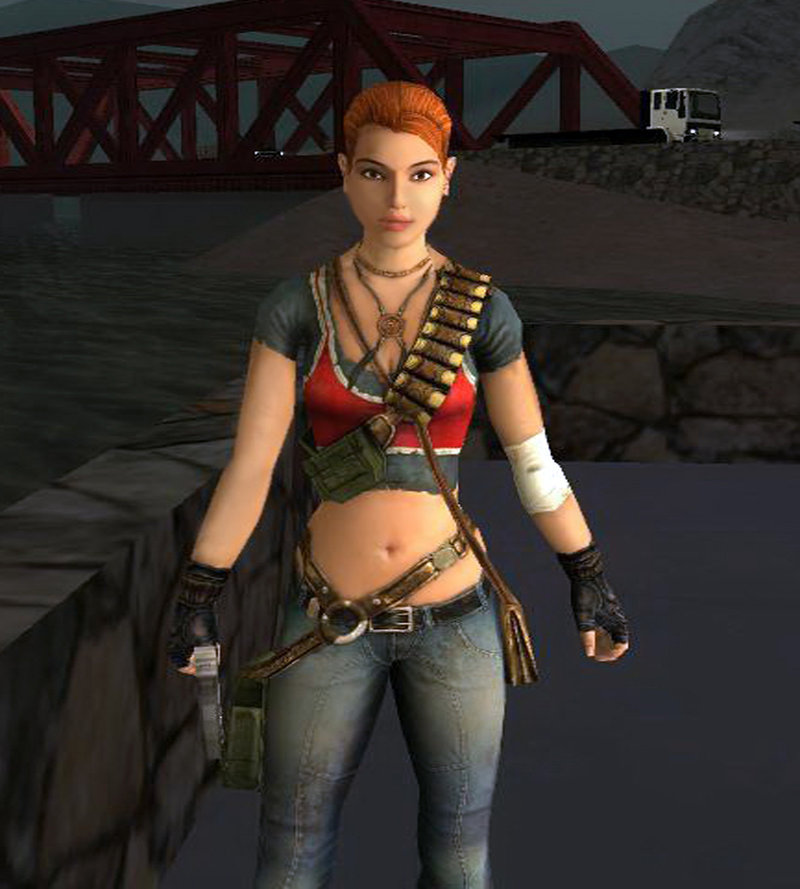 The game also has a lot of frightening pictures like severed limbs, blood, heads flying to bits and other things.
If the new movie can't answer these questions satisfactorily — especially the first one, about how the heroes killed off are brought back to life — then the iconic final scene from 'Avengers: Infinity War' won't stand the test of time. When future moviegoers look back at that moment, they'll cringe from the memory of how the payoff that it built up to simply didn't deliver in the final installment. Similarly, if 'Avengers: Endgame' can't deliver satisfying conclusions to the story arcs of the superhero characters we've been following since the beginning of the Marvel Cinematic Universe — Iron Man, Captain America, Thor, the Incredible Hulk and all of their secondary characters — then this movie will be regarded as one of the ultimate letdowns, a spectacular finale that didn't deliver anything substantive beyond the spectacle.
The stakes couldn't be higher for 'Avengers: Endgame,'and if the nearly sold-out screenings that I saw when I purchased my early ticket are any indication, they will have one of the largest audiences in history watching to determine whether they will rise to meet them.